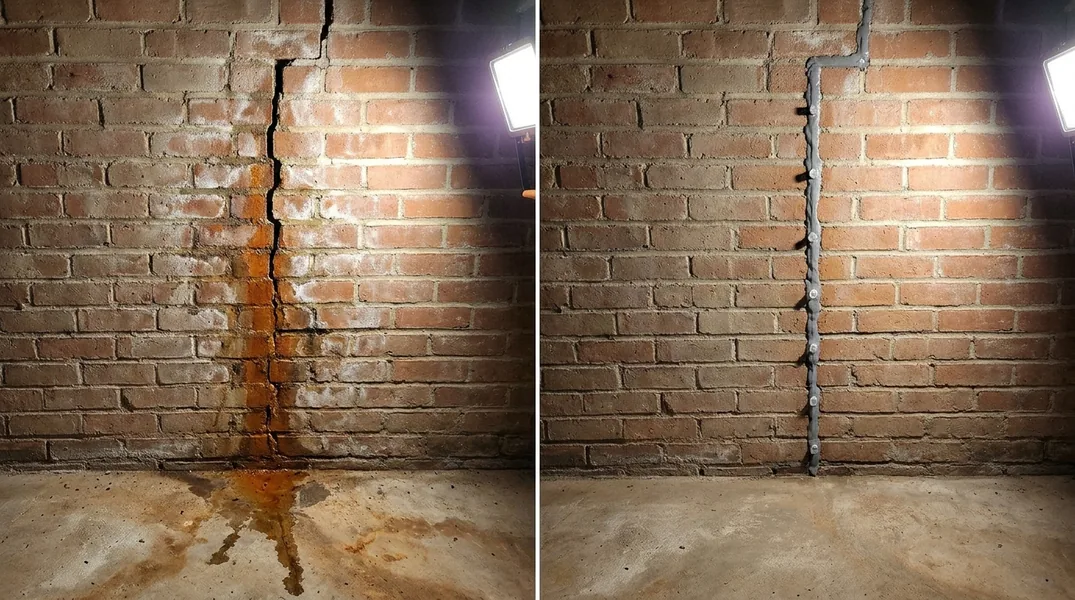
The Piedmont Clay Problem: Why Gaston County Soil Is Different
If you live in Gastonia, you already know that the ground here behaves differently than in other parts of the country. The Piedmont region is famous for its dense, reddish clay soil, and Gaston County sits right in the heart of it. This clay is not just a gardening nuisance. It is the single biggest reason homeowners here deal with wet basements, cracked foundations, and persistent musty odors year after year.
Unlike sandy or loamy soils that let water drain through quickly, Piedmont clay is made of extremely fine particles that pack tightly together. When it rains, the water has nowhere to go. Instead of soaking down into the earth, it runs along the surface or pools against your foundation walls. Over time, that trapped water builds up hydrostatic pressure and forces its way through even the smallest cracks in concrete or mortar. This is why Basement Waterproofing in this region has to account for soil behavior, not just wall cracks.
How Clay Soil Foundation Seepage Actually Happens
The mechanics of clay soil foundation seepage are straightforward once you understand them. Clay expands when it absorbs moisture and shrinks when it dries out. That constant cycle of swelling and contracting puts enormous stress on your foundation. During a wet spring, the clay around your home can swell enough to push against basement walls with thousands of pounds of pressure. During a dry summer, it shrinks away, leaving gaps where water can rush in during the next storm. This soil movement is relentless, and it is the root cause of most Gastonia basement leaks.
What makes it worse is that clay drains so slowly that water often remains trapped against your foundation for days after a rain event. That prolonged exposure is what leads to dampness, efflorescence (the white powdery stains on basement walls), and eventual structural damage. Homeowners in Belmont and Mount Holly see the same pattern because they share the same Piedmont clay profile. The soil does not discriminate: it pushes water toward every foundation it surrounds.
Signs Your Gaston County Home Is Losing the Battle Against Clay
Most homeowners do not realize they have a clay-related foundation problem until it is well advanced. The early warning signs are easy to miss: a faint musty smell in the basement, a small damp spot near the base of a wall, or paint that starts to bubble and peel. As the problem progresses, you may notice white chalky deposits on the concrete, which indicate that water is moving through the wall and leaving minerals behind. Cracks in the floor or along the cove joint where the wall meets the floor are another strong indicator that hydrostatic pressure is building up.
Outside the house, look for soil that has pulled away from the foundation, leaving a visible gap. You might also see standing water in the yard after a storm or notice that gutters overflow because the clay cannot absorb the runoff fast enough. If you spot any of these signs, it is worth getting a professional assessment before the damage spreads. A proper Foundation Waterproofing plan can address the source of the water rather than just the symptoms. Homeowners in Cramerton and across the county face the same clay-driven issues, and early intervention saves thousands in repairs.
Basement Waterproofing Near Me: Solutions Built for Piedmont Clay
Not every waterproofing method works well in clay soil. Techniques that rely on water draining quickly through sandy soil often fail here because the clay simply will not let water move. That is why local expertise matters. A contractor who understands Gaston County soil will typically recommend a combination of approaches. An Interior Drain Tile System captures water that has already entered the basement and directs it to a sump pump, relieving hydrostatic pressure before it cracks the floor. This is often the most reliable solution for existing homes where exterior excavation is impractical.
For homes under construction or where the foundation is accessible, Exterior Basement Waterproofing can stop water before it ever reaches the wall. This involves applying a waterproof membrane to the exterior of the foundation and installing drainage that redirects water away from the house. In clay soil, exterior drainage must be designed carefully because the clay will not absorb the water you redirect. Grading the yard, extending downspouts, and sometimes installing French drains are all part of a complete strategy. The right combination depends on your home's age, construction, and the specific way water is entering.
Basement Waterproofing Cost in Gastonia: What to Budget
Homeowners often ask what waterproofing will cost, and the honest answer is that it depends on the scope of the problem. A small crack injection might be a few hundred dollars, while a full interior drain tile system with a sump pump can run several thousand. Exterior waterproofing is typically more expensive because it involves excavation, but it can be the best long-term solution for certain foundations. The key is to get a detailed inspection and a written scope of work so you know exactly what you are paying for. You can review general pricing guidelines on our site to get a ballpark before you call.
It is also worth thinking about cost in terms of what you avoid. Foundation repairs caused by unchecked clay soil movement can easily reach five figures, and that does not include mold remediation or lost storage space in a wet basement. Waterproofing is an investment in protecting the value of your home. When you request a free estimate, we will walk you through the options and help you prioritize based on your budget and the severity of the issue. There is no pressure and no obligation, just a clear explanation of what your home needs.
Why Local Experience Matters for Gastonia Homeowners
You would not hire a roofer from Arizona to handle hurricane damage in Florida, and the same logic applies to waterproofing in clay country. Contractors who are not familiar with Piedmont clay often recommend solutions that work in other regions but fail here. They might suggest a simple sealant or a surface drain that clogs within a season because the clay particles are so fine. Local experience means knowing how the soil behaves during wet winters and dry summers, how water moves across a graded yard in this region, and which systems hold up over time.
At Gastonia Waterproofing, we have seen every variation of clay-related foundation problem in this area. We know that a home in Gastonia may need a different approach than one in Belmont or Mount Holly because of subtle differences in elevation and drainage patterns. If your basement is damp, musty, or showing signs of seepage, call us at (980) 448-7213 to schedule an inspection. We will explain what is happening, why the clay is causing it, and what can be done to fix it for good.
Looking for a professional basement waterproofing contractor in Gastonia? Gastonia Waterproofing responds fast for all your basement waterproofing needs.
Get a Free QuoteOur services: Basement Waterproofing · Interior Drain Tile System · Exterior Basement Waterproofing